 MR Construction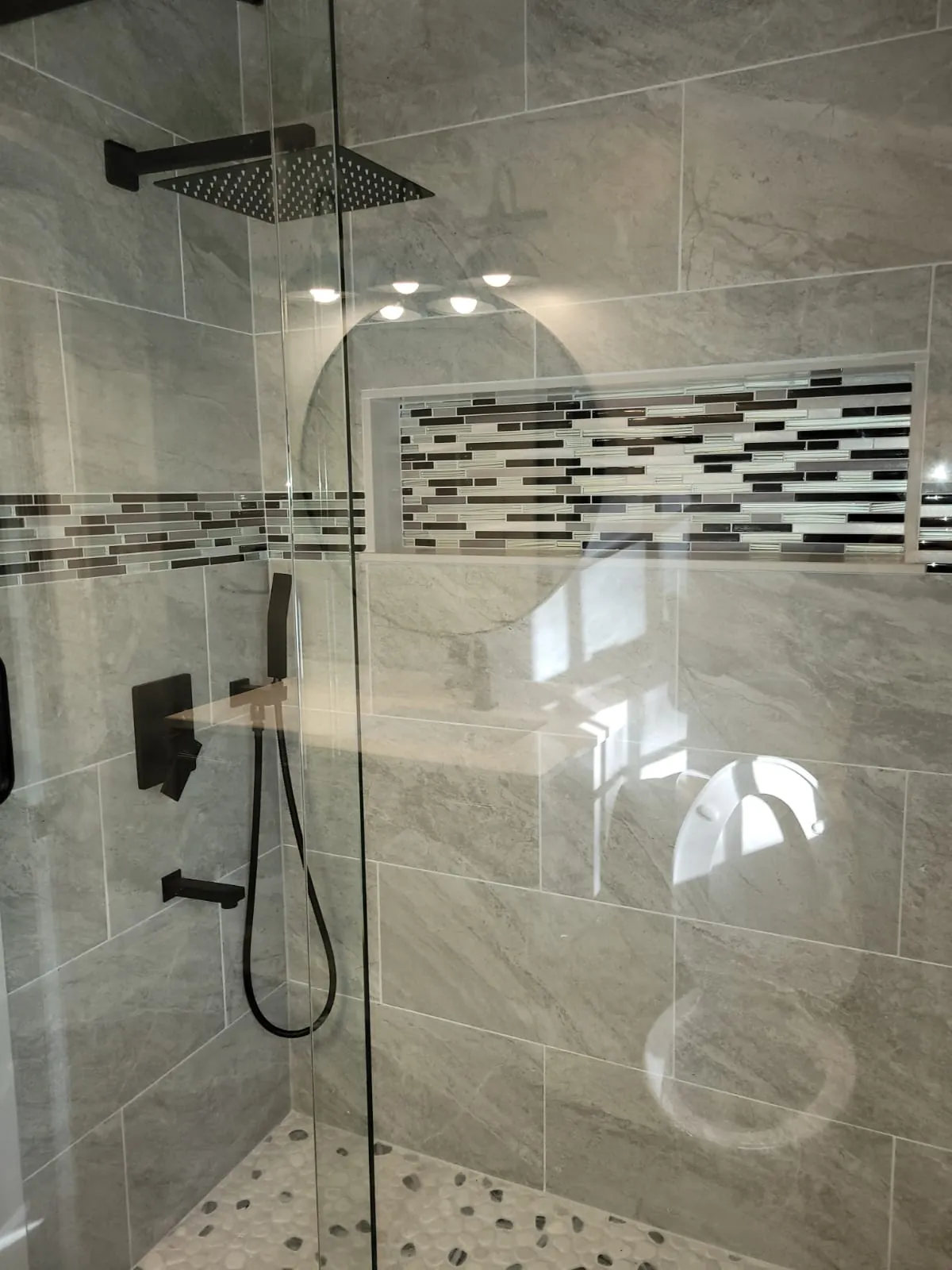
What are the phases of a bathroom remodel?
A bathroom remodel moves through the same phases in almost every house: estimate, design and material selection, permits, demolition, rough-in by the licensed plumber and electrician, rough inspections, walls and waterproofing, tile, fixtures, and a final inspection and walkthrough.
Most of these steps happen in order, not side by side. Tile can't start until the waterproofing is done, waterproofing can't start until the walls are closed, and the walls can't be closed until the rough plumbing and wiring have passed inspection. That chain is why one slow step pushes everything behind it.
- Estimate and written scope
- Design, material selection and ordering
- Permits from your town
- Demolition and repairs to framing or subfloor
- Rough plumbing and electrical by licensed trades
- Rough inspections
- Wallboard, waterproofing and tile
- Vanity, toilet, fixtures, glass and paint
- Final inspections and walkthrough
How long does the planning stage take before work starts?
Planning usually takes longer than homeowners expect, often a few weeks and sometimes more, because the layout and every material have to be settled before the bathroom is torn out.
The things that set the pace here are decisions and lead times. Stock vanities, toilets and common tile can arrive within days. Custom vanities, special-order tile, frameless glass that has to be measured after the walls are built, and specific fixture finishes can take several weeks. Choosing everything before demolition, and confirming it is in stock or on order, is the single best way to keep the bathroom from sitting half-finished.
MR Construction Revolutions includes design guidance on materials, finishes and layout, and gives you a written price and schedule after a free in-home estimate, so you know the order of work before anything comes out of the room.
Who pulls the permits for a bathroom remodel in Massachusetts?
In Massachusetts, plumbing permits are issued by the local plumbing inspector and only to licensed plumbers, and electrical work has to be done by a licensed electrician, so the plumber and electrician on your job pull their own permits.
The state's plumbing board says a permit is required before plumbing is installed, altered, removed, replaced or repaired, with an exception for minor repairs like fixing a leaky faucet or clearing a blocked drain. Moving a toilet, replacing a shower valve or relocating a drain is not a minor repair. Depending on the scope, your town's building department may also require a building permit. Ask to see the permits. Both state boards describe the permit as your assurance that the work will be inspected.
How long a permit takes depends on the town and the time of year. Check with your local building department, or ask your contractor what they are seeing at the moment.
How long do demolition and rough-in take?
Demolition of a typical bathroom often takes a day or two, and rough plumbing and electrical commonly take a few more days, depending on how much is being moved.
Keeping the toilet, tub and vanity drains where they are is the fastest path. Moving a toilet, converting a tub to a walk-in shower, or adding a fan circuit and new lighting adds rough-in time and can mean opening ceilings or floors below. After rough-in, the plumbing and wiring inspectors have to see the work before the walls are closed. In Wakefield, the Inspectional Services office lists set call-in windows for scheduling wiring and plumbing inspections, and a missed slot can mean waiting days for the next one.
Why does tile take so long?
Tile is often the longest hands-on stage of a bathroom remodel, commonly one to two weeks, because the shower has to be waterproofed and cured first and each layer of tile, grout and sealer needs drying time.
The shower walls and floor get a waterproofing system under the tile, and that membrane, the pan and the thinset each have cure times set by their manufacturers. Small tiles, mosaics, niches, herringbone floors and accent bands all take more cutting and setting than large plain tile. If you want a faster job, a simpler tile layout is one of the few choices that really shortens it.
What makes a bathroom remodel take longer than planned?
The three most common reasons a bathroom remodel runs long are permit and inspection scheduling, special-order materials that arrive late or damaged, and hidden problems found during demolition, especially water damage in older homes.
Under an old tub or toilet it is common to find soft subfloor, rotted framing or old plumbing that has to be fixed before new work goes on top. None of that is visible at the estimate. A good contractor tells you up front that it can happen, prices the fix before doing it, and adjusts the schedule in writing.
- Inspection slots booked out, or a failed inspection that needs a return visit
- Special-order vanity, tile or glass arriving late or damaged
- Rot, mold or leaks found under the old floor or behind the walls
- Changing a tile or fixture choice after demolition starts
Can I use the bathroom during the remodel?
No, a bathroom being fully remodeled is usually out of service from demolition until the toilet and fixtures are set near the end, so plan around a second bathroom or a temporary arrangement.
If it is your only bathroom, say so at the estimate. Sometimes the toilet can be reset temporarily at the end of a work day during certain phases, but not during demo, rough-in or floor tile. Knowing that early lets you plan instead of finding out on day one.
In Wakefield and nearby towns
In Wakefield, building permits come from the town's Inspectional Services office at 1 Lafayette Street, which also lists a wiring inspector and a plumbing and gas inspector with their own call-in windows for inspection requests. Reading, Stoneham, Melrose, Woburn and the other towns MR Construction Revolutions works in each run their own building departments with their own schedules, so the permit and inspection part of a bathroom timeline can differ a week or two from one town line to the next. Ask your contractor what your town requires before you set a finish date.
Questions homeowners also ask
Usually, yes. A half bath has no shower or tub to waterproof and tile, which removes the longest stage of the job. If the toilet and sink stay where they are, it can be a much shorter project. Moving plumbing or adding new lighting circuits still means permits and inspections, which add calendar time even when the work itself is small.
Yes, for anything that isn't a stock item. Vanities, special tile, fixture finishes and some toilets can take weeks to arrive. Having them on site, or at least confirmed, before the old bathroom comes out keeps you from living with a gutted room while you wait. Glass shower doors are the exception, since they are measured after the tile is done.
Often it does. Converting a tub to a walk-in shower usually means moving or changing the drain, building a new shower floor and waterproofing a larger area, all of which add rough-in, inspection and tile time compared with setting a new tub in the same spot.
Make your choices early and stick to them. Pick tile, vanity, fixtures and paint before demolition, keep the layout simple if speed matters, and be available to answer questions when something turns up behind the walls. Changes after work starts are the most common delay homeowners control.
You should. Ask any contractor for a written scope and schedule before work begins, with an understanding that inspection dates and hidden damage can move it. MR Construction Revolutions gives a written price and schedule after its free in-home estimate.